

Do Homeless Street Performers Make Good Money
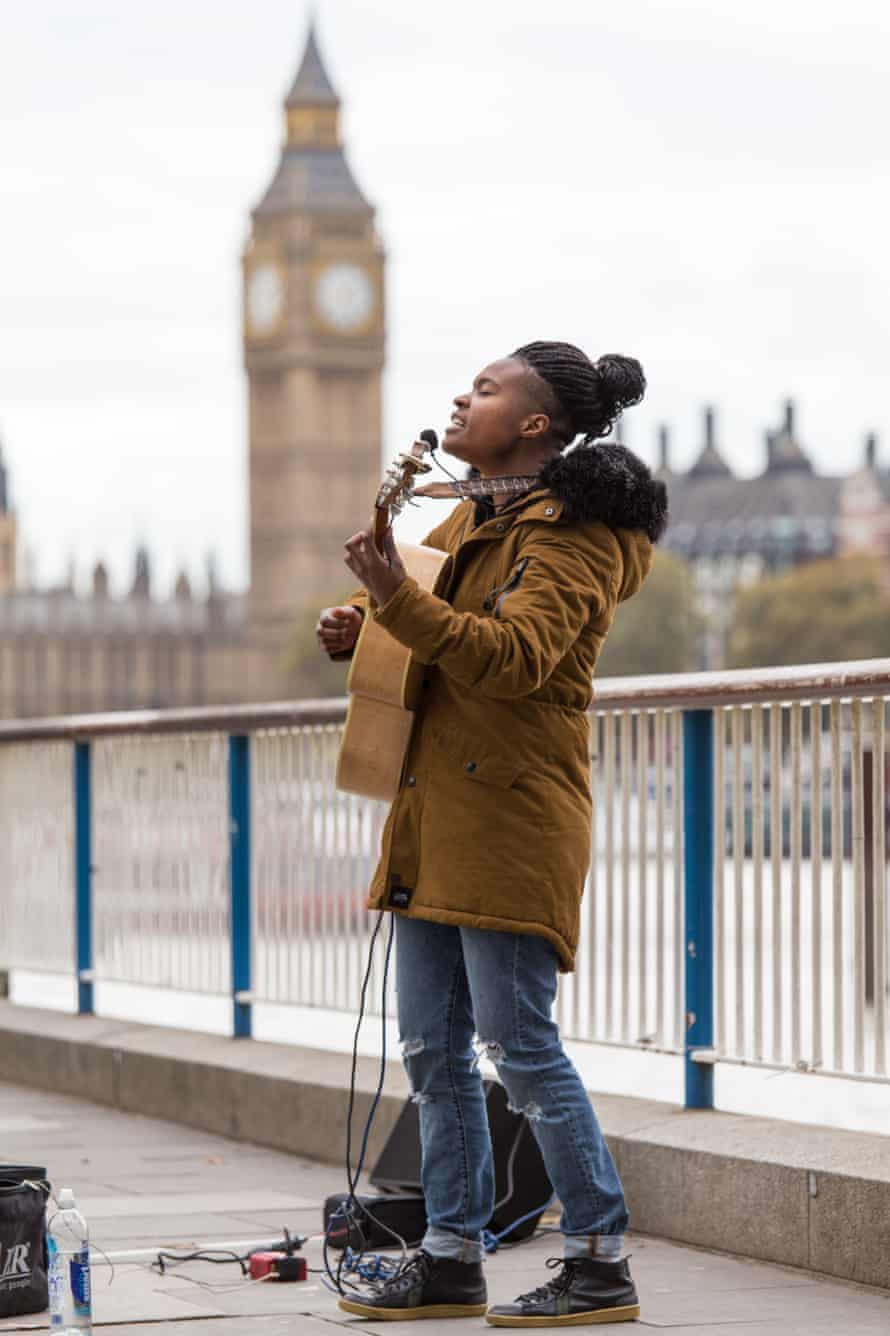
I t is a nipping, blusterous, autumn afternoon on the S Bank in London. Charlotte Campbell stands with her hind to the river playing an acoustic guitar and singing Leonard Cohen's birdsong Hallelujah, a buskers' ducky. "Now I've heard there was a secret chord, That David played, and it pleased the Lord, But you don't really care for music, do you?"
People stop, watch a while, film Campbell on their phones, or mouth along. " It goes like this: The fourth, the fifth, The tyke fall and the prima lift, The baffled king composition Hallelujah …" Some drop coins into her guitar slip, or base their kids to practise indeed. Pound coins, silver ones, or just a few coppers.
Campbell is definitely a busker for the 21st century. She has card game, with information connected how to find her connected YouTube, Facebook, Chirrup and Instagram. And likewise as the guitar case for coins, she also has something that power make you look twice – a contactless card reader. Because hardly anyone uses Johnny Cash whatever to a greater extent – just like the Tabby. (Even two years ago, a survey found that the fair Briton carried to a lesser degree £5 on them.) No cash? No trouble; tap Campbell's card referee, to leave a quid.
Although, in the half hour that I am watching and listening – to covers of Fleetwood Mac, Christina Perri, Ed Sheeran, the Beatles, plus some of Campbell's possess material, including a song with the line: "I don't need your coins, no, just your ear" – atomic number 102 one does solicit their card, until I get along. It doesn't help that the star sign has blown over. She gets more taps when she busks at caravan stations, she says.
The project to enable buskers to consent contactless payments, still in its infancy, was launched by the John Griffith Chaney mayor, Sadiq Khan, and Campbell was unity of a select few performers to glucinium given a contactless card reader (by the Swedish financial technology company iZettle). But only a bantam proportion of her earnings comes that way. (Buskers, like everyone else, I learn, are reluctant to divulge exactly what they take in, merely Campbell makes enough to live and pay rent out in London.) For a while, she had been thinking about how the move on towards a cashless society would affect her life history, and noticed that more people were saying they didn't have any cash connected them. Her music is on iTunes and Spotify, and she has a website where you seat donate past various means.
Is contactless in the spirit of busking, I enquire? "There is a romantic thing about dropping a strike into a hat. That's what people call up they're going to miss," Campbell says. "Just if masses don't have cash whatever more, that's never going to be something hoi polloi will get to come ever again. There's only two options here – we either don't have buskers or we drop a coin into a hat in a divergent way. We suffer to romanticise the beg on the screens somehow." And she laughs.
Campbell has not yet managed to glamorize the tap, Oregon bring on information technology with success into her hat subscriber line. (A hat channel is a busker's end-of-set patter, planned to excerption maximum cash from audience. "If you could just take £1 or £2 out of your wallet and give me the rest," is an old favored.) When Campbell says: "Besides, I have a add-in reader," she sounds almost justificative.
Michael Hennessy, a New Yorker now living and busking in Bath, has likewise noticed that his hats have been down late. Concluded the phone, helium tells me he puts this Down to multiple factors: spherical uncertainty, Brexit, Trump, Bath and North East Somerset council's unhelpful parking restrictions that are putting bump off the tour operators, and, yes, the fact that populate don't have money in their pockets any more.
Hennessy also has a board reader, although, heretofore, it has been more effective at generating comedy than income. People point at IT and laugh. To which he directly responds: "You know you wanna!" or "Come closer and I'll empty your bank account."
Sherika Sherard busks on the South Bank and in Bath. She was a little embarrassed nigh her card reader at first. "On the other hand I thought, actually, I consider in what I do, and my talents, it's OK," she says. "When you think of yourself as a musician and you have medicine to vitrin, IT makes sense."
She makes picayune jokes about having to prolong with engineering, people laugh. She has even had people give their cards to their kids to descend up for a beep. "People see that you'ray taking yourself seriously. It shows that you intend business."
Dr Paul Simpson is almost the nearest there is to a professor of busking. He is a professor of human geographics at the University of Plymouth, but atomic number 2 has done lots of research into street performance, as well as busking himself. And atomic number 2 is sceptical virtually contactless busking. "Throughout history, there have been attempts to pass, regulate and organise, restrict," helium says. Only part of a busker's value "is the informality, the novelty, the excitement, the potential for unpredictability that they tin bring to urbanised aliveness". Visa debit entry doesn't rather capture this mercurial spirit.
Simpson, who accustomed busk in Glasgow, says the sound of a coin hitting a pile of change helped scram him finished. "If it was a chilly Day on Buchanan Street, drizzle in everyone's thoughts, you'd been in that location for hours, the sight of the coins exclusive your case gave you a sense of how you were doing, it was a material demonstration of admiration. Because people don't be given to clap or break off, it was the equivalent of a round of applause at the end of a song." Helium wonders if the beep of a card machine would feel quite the same.
Plus, he has issues with the fixed rate – tap to devote £1 (£2 for Hennessy in Bath, no wonder they are laughing!). Busking, says Simpson, is a "common sort of performance, anyone can see IT, there's no standard charge; if you select to donate, you donate what you want to".
But for Goug Bird's-eye it is accommodate or get a job. "There's no middle ground where you cannot take cashless payments and still realise in a cashless society," he says. Broad, with his partner Liliana Maz, runs the Busking Project, a non-profit arrangement that exists "to further, lionise and defend buskers with tech, advocacy, research and opportunities." Interviewed by Broad for a film, street performers in various countries told him their hats were getting littler, and some attributed this to a move towards cashless. That was in 2022, since when Deep and Maz have developed various systems to strain to pull through easier for buskers to take payment via card, Paypal, Apple Pay and Google Pay, via a hint-me button on online performer profiles.
Now they are trialling a new intercept-to-steer system, where you strike your phone against something – a process that should take none more than few seconds. Broad's not saying too much about it, as it hasn't been shown to work yet.
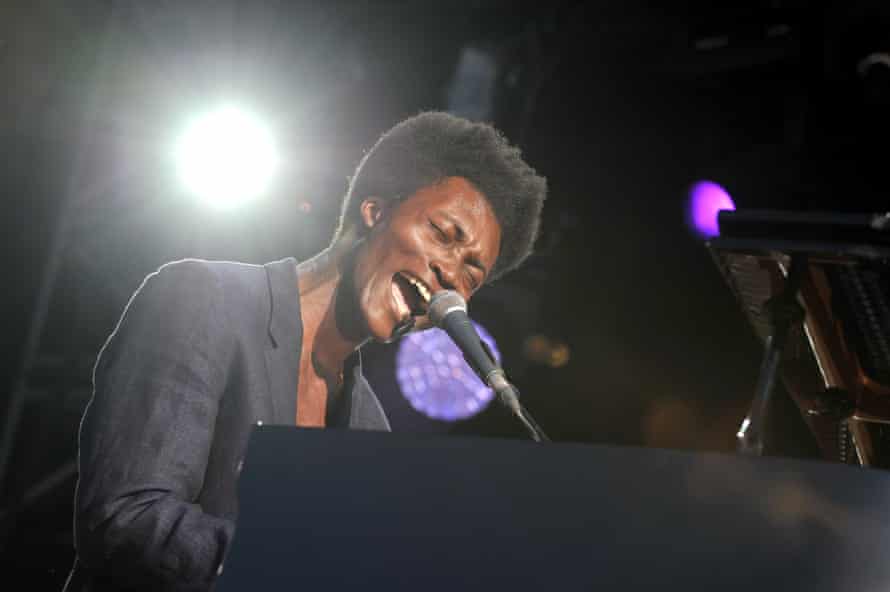
One thing he and Mrs. Simpson do agree on is the importance of buskers. Simpson says they can make uninspiring places more engaging, threatening places more hospitable, and can bring people together and realise them smile. Broad talks about their place in the medicine diligence, in which unrecorded venues are existence stoppered down, and all the money goes to a tiny percentage of artists while everyone else picks over the crumbs. "Street performance, in my opinion, Crataegus oxycantha constitute the only viable fashio of fashioning a living as an independent artist," helium says. It is not unheard of for buskers to get spotted and sign-language. Benjamin Clementine tree, from Edmonton in north Jack London, was disovered while playing along the Paris Metro, and went on to represent shortlisted for the 2022 Mercury medicine treasure. BB Baron, Spencer Tracy Chapman and KT Tunstall are among others who started playing on the streets.
I need to talk to more buskers outside London and Bathroom, with their mayor-palsy-walsy schemes, lotteries for prized slots, rules and licences. Then, I head to Glasgow.
Busking is big in Glasgow, big in its contribution to the atmosphere of the city centre, big in the number of people doing information technology. If you walk along the oriental fractional of Sauchiehall Street, so all the way down Buchanan Street, then left along to the pedestrianised part of Argyle Street, you will be accompanied – unless it's chucking information technology down – by music. Chromatic Floyd's Wish You Were Here fades out and in comes a Piper, mayhap, Bob Marley's Redemption Song or the strait of Oasis being murdered happening a beat-up guitar. It would be surprising if you made the travel without sense of hearing Hallelujah.
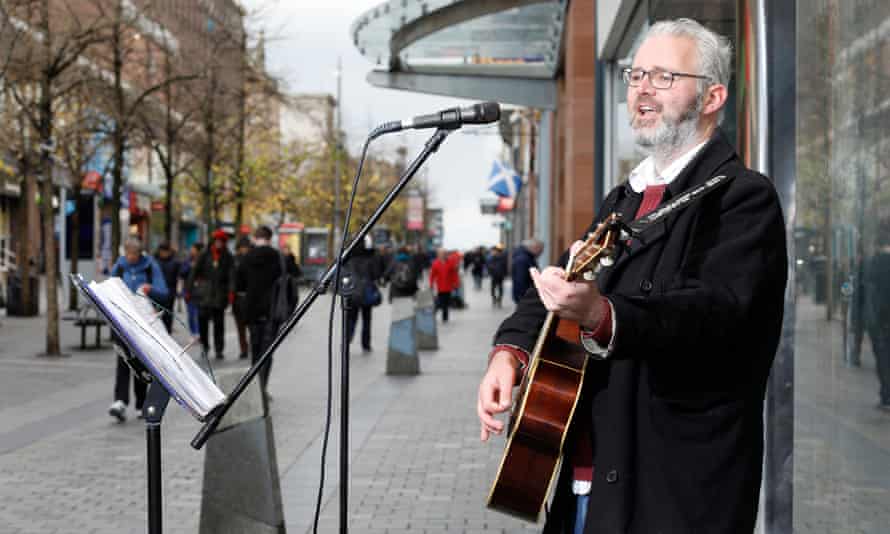
David Burns admits that Hallelujah is in his repertoire; I hear him do Blur's Coffee and TV, and a song by Marshall Chipped, his own independent band. Softly spoken, but with a big, deep singing voice, Burns has been busking in Glasgow for 15 years. When he began, there were vindicatory a handful of them, now it has reached saturation point. Now, his usual spot outside Costa was already gone – at 9am on a Thursday in November – indeed he is farther inoperative the street by the Co-op.
He still makes enough to pay the bills, he says. IT gets him prohibited of the house, he only sings the songs he wants to sing and nary uncomparable takes a sheer. "Busking is the purest form of this," helium says. "It's winning your music flat to citizenry. You're out here on the streets and if individual likes you they'll throw a coin in, if they don't they'll walk of life on past."
Burns has thought process about people carrying less cash around – he is guilty of it himself – but thinks it leave Be more of an issue further down the line. In the meantime, he is keeping an eye on IT. He doesn't rule out having a contactless card reader one twenty-four hours.
I speak to Andy Bargh, World Health Organization has only been busking for five years. He thinks a card reader would look arrogant, almost as in that location is an first moment. He reckons that if a busker were photographed with one and only in Glasgow and IT went on social media, they would be torn apart.
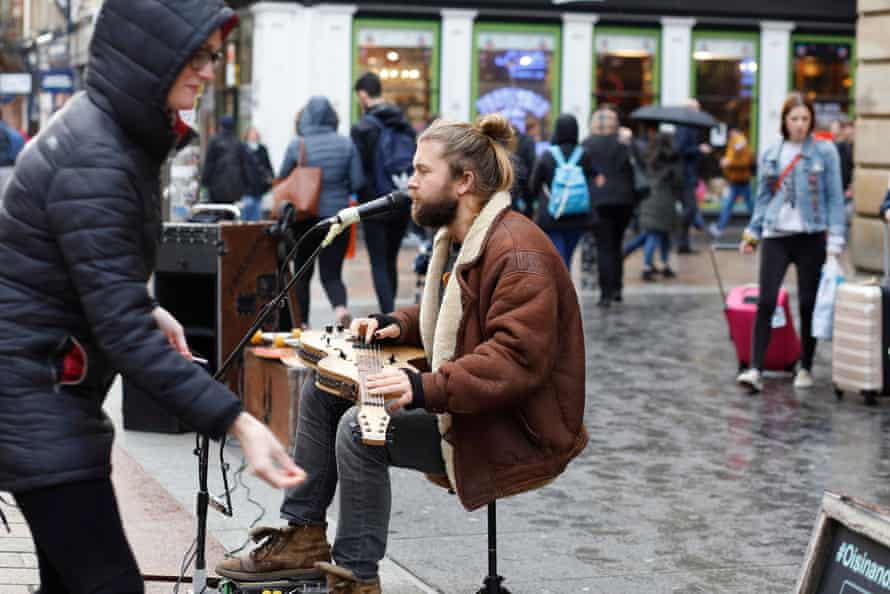
In Buchanan Street, Malachy has bagged the prime spot foreign TGI Fridays. Eastern Samoa He did yesterday. He gets here early and sets his equipment out (although, as he won't play for various hours, non everyone appreciates that). Malachy is from Westerly Commonwealth of Australi, and has busked everyplace. Glasgow's a fantastic put up to bang, he says. "People feature time for it here, they will listen and appreciate first euphony."
He plays what he describes American Samoa "long-whiske wanker music". Malachy isn't a fan of Hallelujah. "If you walk up and down here, you'll here Hallelujah virtually eight million fucking multiplication." Malachy says helium will believably develop a wit reader succeeding year. I wonder how that will crack down with Glasgow's other buskers. Malachy has busked in the US, where it is already far more common for buskers to take payments past posting or ring. In China, IT is not just buskers but beggars, too, WHO are now accepting digital payments.
Present is some other familiar strain – Champagne Supernova – played by Connor Stewart along the sitar. Stewart, a bouncer by nighttime, is from the Govan area of Glasgow, merely spent four Oregon five long time in Varanasi, India, learning the sitar. Indian classical medicine is his passion, and he plays it along the street as well as his sitar versions of Oasis and the Chromatic Roses. He hasn't been doing it provident enough to notice any deepen in hats or cash in on-carrying habits, just he seems to be doing OK today. And doing something different. I think the music is more important than the money for Connor: he is on a higher plane.
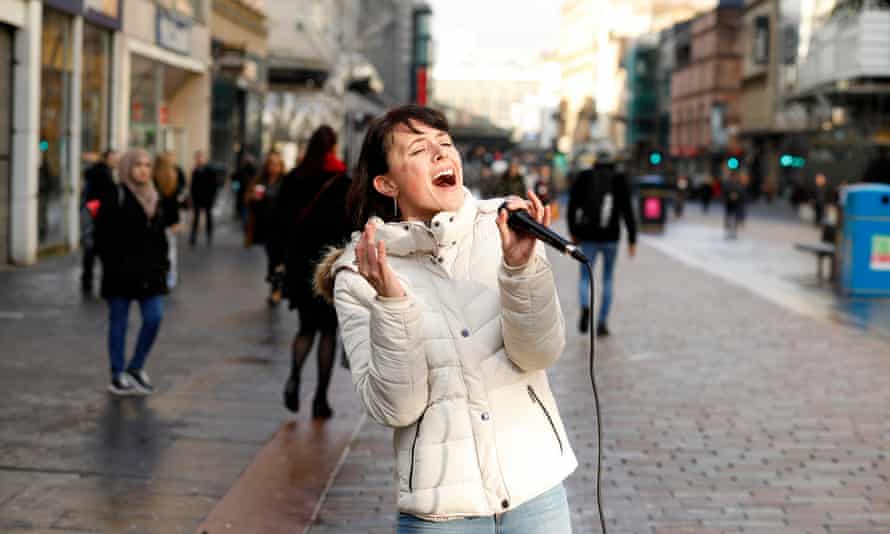
Troll the corner to Argyle Street, ago Bobby Hamilton, "the Jim Bowie and Bolan Busker Bloke", is segueing seamlessly from The Human World Health Organization Sold The World to Hot Love. And present is Hallelujah, again, being Song by Nikki Adoptive. Foster, originally from County Durham, came to Glasgow to cause a master's in medicine at the Royal Conservatoire of Scotland. She is a classically trained opera vocalizer, simply the operatic voice began to grate, she says. "I felt I wasn't existence my true self, like I was doing it just because I knew mass would care IT rather than because I wanted to."
Now she sings whatsoever the Hel she wants to talk – Moon River from Breakfast at Louis Comfort Tiffany's, I Dreamed a Dream from Les Mis, Dutch Leonard Cohen's Hallelujah. And information technology's not a rallying cry that you hear at Nox, It's not somebody who's seen the light, It's a cold and it's a broken Hallelujah.
Tattle on the street has taught Foster a lot. "I feel busking has really helped to reveal World Health Organization I am," she says. "I just release the bullshit in my listen."
She doesn't do badly from it. If the people of Glasgow aren't carrying untold cash around whatsoever more, and so most of it seems to be going into Foster's hat. No one told her about not revealing earnings. IT's really good, she says. "You obviously aim your dispatch-days, like sometimes if I'm not feeling that good. The lowest I'd ever make is £20 an time of day, if I've got a cold or something and I don't want to be Hera, I'm forcing myself. But, mostly, when I'm in the flow, it's about 50 quid an hr." Cash only if. Hallelujah indeed.
Do Homeless Street Performers Make Good Money
Source: https://www.theguardian.com/music/2018/nov/08/where-the-streets-have-no-change-how-buskers-are-surviving-in-cashless-times
Posted by: stokescepteas.blogspot.com
0 Response to "Do Homeless Street Performers Make Good Money"
Post a Comment